Finding My Footing: How Balance Became My Secret Weapon Against Chronic Illness
Living with a long-term health condition changed the way I move, think, and live—especially my sense of balance. It wasn’t just about not falling over; it became a marker of progress, strength, and control. I started small, testing moves at home, noticing shifts most people overlook. What I discovered wasn’t a miracle cure, but something deeper: better balance meant better daily function, fewer setbacks, and more confidence. This is how I rebuilt stability—from the ground up.
The Moment I Realized My Body Was Off-Balance
It happened in the quiet of a Tuesday morning. I was reaching for my coffee mug on the kitchen counter when my foot caught on the edge of the rug. I stumbled, caught myself on the table, heart racing. No fall, no injury—but the moment left me shaken. This wasn’t the first time. In the past few months, I’d noticed a growing unease in my body: wobbling when standing up from the couch, gripping railings too tightly on stairs, hesitating before stepping off curbs. What once felt automatic now required focus and fear.
That stumble was a wake-up call. I had been managing a chronic autoimmune condition for years, but I never connected my unsteadiness to my overall health. I assumed fatigue or joint pain were the main challenges. Yet losing my balance wasn’t just a physical slip—it was a signal. My body was telling me something was off, not just in my joints or immune system, but in the very foundation of how I moved through the world.
Emotionally, it was humbling. Balance is something most people take for granted until it’s gone. When you can’t trust your own body to keep you upright, it chips away at your independence and confidence. Simple tasks—loading the dishwasher, walking to the mailbox—become loaded with risk. I began to withdraw, avoiding uneven sidewalks or crowded spaces. The fear of falling quietly reshaped my life.
But that moment in the kitchen also sparked determination. If my balance had declined, could it be improved? Was it possible to regain not just steadiness, but the freedom that comes with it? I started researching and soon learned that balance is not a fixed trait—it’s a skill, one that can be trained, restored, and strengthened, even in the face of chronic illness.
Why Balance Matters More Than We Think in Disease Management
Beyond the obvious risk of falls, balance is increasingly recognized by healthcare professionals as a vital sign of overall health—just like blood pressure or heart rate. Poor balance is not merely a side effect of aging or illness; it can accelerate decline and reduce quality of life. For individuals managing chronic conditions, maintaining postural control is a form of preventive medicine.
Studies have shown that impaired balance correlates strongly with higher rates of hospitalization, longer recovery times, and greater likelihood of losing independence. For example, adults with chronic conditions who report balance issues are three times more likely to experience a fall serious enough to require medical attention. These falls often lead to fractures, reduced mobility, and a cycle of inactivity that worsens underlying health problems.
Chronic illnesses impact balance in multiple ways. Neurological disorders like multiple sclerosis or Parkinson’s disease affect nerve signaling and muscle coordination. Diabetes can lead to peripheral neuropathy, reducing sensation in the feet. Arthritis alters joint alignment and range of motion, making movements less predictable. Even cardiovascular conditions, which affect blood flow to the brain, can result in dizziness or lightheadedness that disrupts equilibrium.
Medications commonly used to manage these conditions can also play a role. Some blood pressure drugs, pain relievers, or antidepressants may cause drowsiness or dizziness as side effects. Over time, these subtle changes accumulate, making the body less responsive to shifts in posture or terrain. The result is a growing disconnect between intention and movement—wanting to step forward but feeling unsure if the body will follow through.
Yet despite these challenges, balance training is often overlooked in long-term disease management plans. Patients may focus on medication adherence, diet, or cardiovascular fitness, but stability is rarely prioritized—until a fall happens. The truth is, proactive balance work can reduce fall risk by up to 30 percent, according to clinical reviews. It’s not about waiting for a crisis; it’s about building resilience before setbacks occur.
Breaking Down the Three Systems That Keep You Steady
Staying upright is a remarkable feat of human engineering. It relies on a continuous feedback loop between three major systems: the vestibular system in the inner ear, the somatosensory system in the muscles and joints, and the visual system. When these systems work together, balance feels effortless. When one is impaired—common in chronic illness—stability suffers.
The vestibular system, located in the inner ear, acts like a biological level. It detects motion, head position, and spatial orientation. Tiny fluid-filled canals and hair cells send signals to the brain about whether you’re moving forward, tilting, or spinning. When this system is disrupted—by infection, medication, or neurological changes—it can cause vertigo or a persistent sense of unsteadiness, even when standing still.
The somatosensory system provides information from the body’s sensors, especially in the feet, ankles, and legs. These nerve endings act like GPS trackers, constantly updating the brain on pressure, texture, and joint position. Imagine standing on a carpet versus a tile floor—the nerves in your feet detect the difference and help adjust your posture accordingly. But in conditions like diabetic neuropathy, these signals become dulled or distorted. The brain receives incomplete data, making it harder to respond to changes in surface or alignment.
Vision is the third pillar of balance. Your eyes help orient you in space, detecting movement, depth, and obstacles. When vision is impaired—due to cataracts, glaucoma, or even temporary blurriness—your brain loses a key reference point. This is why closing your eyes during a balance test, such as standing on one leg, dramatically increases difficulty.
Chronic illness often affects more than one of these systems at once. For example, someone with diabetes may experience neuropathy (affecting somatosensation), retinopathy (impacting vision), and autonomic dysfunction (influencing blood pressure and dizziness). This multi-system impact makes balance challenges particularly complex. However, understanding these components allows for targeted interventions. By strengthening the systems that still function well, you can compensate for those that are impaired.
Small Moves, Big Gains: My Daily Stability Routine
I didn’t start with elaborate routines or special equipment. My journey began with five minutes a day—simple, safe movements I could do at home without risk. The goal wasn’t intensity, but consistency. Over time, these small efforts built noticeable improvements in my confidence and coordination.
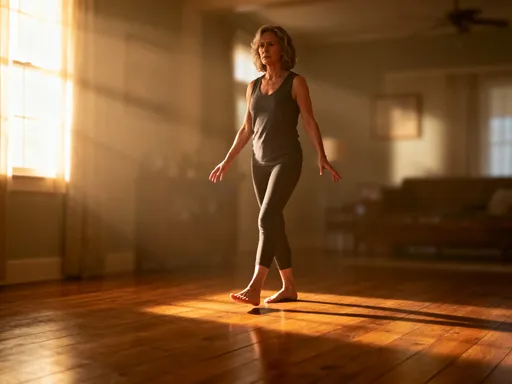
One of the first exercises I adopted was the heel-to-toe walk. I would walk down the hallway placing one foot directly in front of the other, like walking on a tightrope. This targets the vestibular and somatosensory systems by narrowing the base of support and requiring precise control. At first, I held the wall for support and only managed a few steps. Within weeks, I could walk the entire hallway without assistance. This movement improved my gait and made walking on uneven surfaces feel more secure.
Another daily habit was the single-leg stand. I began doing this while brushing my teeth—turning a routine task into a balance opportunity. Standing on one leg for just 10 seconds, then switching, helped build ankle strength and body awareness. As I progressed, I increased the time and tried it with my eyes closed, which challenged my vestibular system. This simple act taught me to trust my body’s ability to adjust in real time.
Seated weight shifts also became part of my routine. Sitting in a sturdy chair, I would slowly shift my weight side to side and front to back, keeping my feet flat on the floor. This exercise enhances core stability and improves control over subtle movements—skills that are essential when standing up or reaching for objects. It’s especially useful for those with limited mobility or joint pain, as it requires no standing.
Each of these exercises was chosen for its accessibility and functional benefit. They mimic real-life movements—stepping, standing, shifting—so the gains translate directly to daily life. I tracked my progress in a journal, noting how long I could stand on one leg or how steady I felt on stairs. Celebrating these small wins kept me motivated. What felt impossible at first became routine, then natural.
Home Hacks That Support Safer Movement
Exercise is essential, but environment matters just as much. I realized that even with better balance, my home could still pose risks. A loose rug, poor lighting, or cluttered floor could undo hours of practice. So, I made a series of practical changes to create a safer, more supportive living space.
First, I removed throw rugs or secured them with non-slip pads. These small carpets are a common cause of trips, especially for those with reduced foot sensation. In the bathroom, I added non-slip mats inside and outside the shower. Wet tiles are a major fall hazard, and a simple rubber mat provides critical grip.
Lighting was another key adjustment. I installed brighter bulbs in hallways, stairwells, and entryways. I also added motion-sensor nightlights in bedrooms and bathrooms to ensure visibility during nighttime trips. Poor lighting forces the brain to work harder to interpret surroundings, increasing the risk of missteps. With better illumination, my confidence at night improved significantly.
Decluttering walkways made a surprising difference. I cleared shoes, bags, and cords from high-traffic areas. Even a small obstacle can disrupt balance, especially if you’re moving while distracted. Creating clear, predictable paths through each room reduced mental load and physical risk.
I also evaluated my footwear. I stopped wearing slippers without backs or smooth soles. Instead, I chose supportive shoes with non-slip soles, even indoors. Proper footwear provides better feedback from the ground and improves stability. For those with foot pain or deformities, custom orthotics or therapeutic shoes may be recommended by a healthcare provider.
These changes weren’t about admitting weakness—they were about honoring my body’s needs. Stability isn’t just built through exercise; it’s nurtured through environment. By making my home more fall-resilient, I created a space where I could move freely, without constant vigilance.
When to Seek Professional Help—and What to Expect
While home exercises and safety adjustments are valuable, they are not a substitute for professional guidance. I learned this after experiencing persistent dizziness that didn’t improve with self-directed routines. I consulted my doctor, who referred me to a physical therapist specializing in balance rehabilitation. That decision marked a turning point in my progress.
A physical or occupational therapist can conduct a comprehensive assessment of balance, strength, gait, and fall risk. This may include tests such as the Timed Up and Go (TUG), which measures how long it takes to stand from a chair, walk a short distance, turn, and sit back down. Other assessments might evaluate single-leg stance time, step length, or response to surface changes. These objective measures help identify specific weaknesses and track improvement over time.
Based on the evaluation, a therapist develops a personalized plan. Mine included targeted exercises for core strength, ankle stability, and gaze stabilization—movements I hadn’t considered on my own. The therapist also introduced dynamic activities, such as stepping over obstacles or walking on foam surfaces, to challenge my balance in controlled ways. These exercises were more advanced than what I could safely attempt alone.
For individuals with neurological conditions, vestibular therapy may be recommended. This specialized form of physical therapy addresses inner ear dysfunction and can significantly reduce dizziness and imbalance. Techniques such as habituation exercises or canalith repositioning maneuvers are used depending on the diagnosis. These treatments are evidence-based and highly effective when administered by trained professionals.
Seeking help is not a sign of failure—it’s a strategic step in long-term health management. A therapist provides not only expertise but also accountability and encouragement. They can modify exercises as abilities change and ensure safety throughout the process. If you’re managing a chronic condition and notice balance changes, don’t wait for a fall to act. Talk to your doctor about a referral. Early intervention leads to better outcomes.
Stability as a Measure of Progress, Not Perfection
Today, I no longer measure my health solely by lab results or symptom logs. I also track how steady I feel—how confidently I walk, how easily I rise from a chair, how little I rely on support. Balance has become a barometer of my overall well-being, a tangible sign that my body is responding to care and consistency.
I’ve learned that stability is not about achieving perfection. It’s not about standing on one leg for a minute or mastering complex poses. It’s about showing up for yourself, day after day, with small acts of attention and effort. It’s about listening to your body and responding with kindness and discipline.
Journaling my progress helped shift my mindset. Instead of focusing on what I couldn’t do, I celebrated what I could. The first time I walked up the front steps without holding the railing. The day I caught myself mid-stumble and didn’t fall. These moments, once rare, became more frequent. Each one reinforced a quiet truth: I was regaining control.
Balance has also deepened my sense of self-trust. Living with chronic illness often feels unpredictable. Symptoms flare, energy fluctuates, plans change. But by building physical stability, I’ve cultivated a parallel emotional resilience. When my body feels steady, my mind feels calmer. When I can move with confidence, I feel more capable in all areas of life.
The journey isn’t over. Some days are still harder than others. But now I have tools—exercises, awareness, support—that help me adapt. I no longer see balance as a lost ability, but as a skill I continue to grow. It’s not just about preventing falls; it’s about standing taller, moving freely, and living fully—no matter what health challenges I face.